Tuesday, February 7, 2017

Charles Dickens' Hard Times in 21st Century China

 21st Century China, described by Charles Dickens
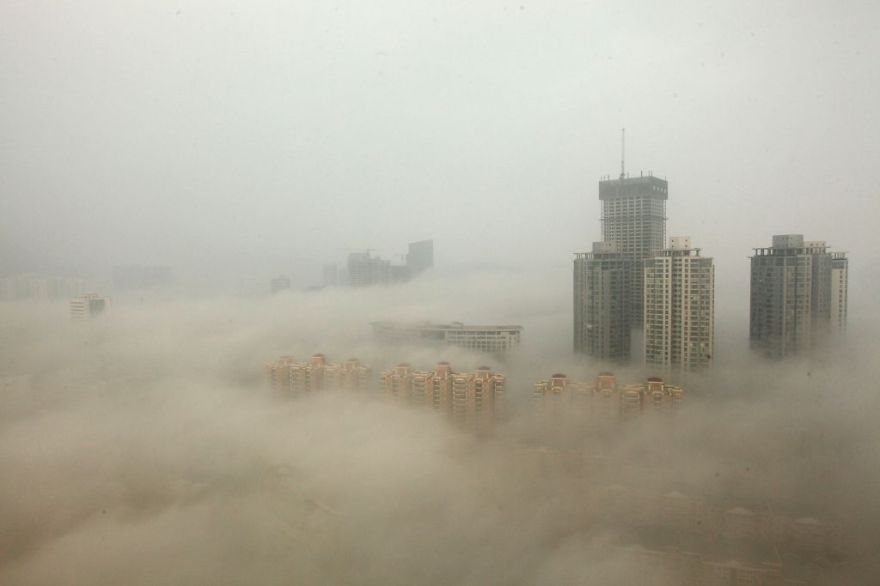
 1. “………a town of red brick, or of brick that would have been red if the smoke and ashes allowed it.
Buildings in Beijing Source

 2. “…….a town of machinery and tall chimneys”.
Industrial zone in China source

 3. “…….interminable serpents of smoke”.
Factories in Beijing Source

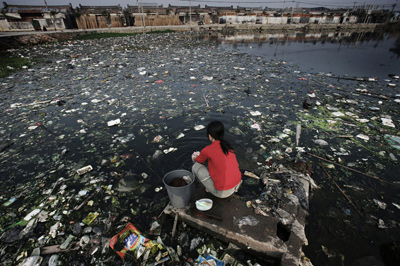
 4. “…….it had a black canal in it”.
River in rural China source

 5. “…….a river that ran purple”.
Local river in Wenzhou, China source

 6. “…….vast piles of buildings full of windows that were rattling and trembling all day long”.
Beijing source

 7. “……..the piston of the steam engine worked monotonously up and down, like the head of an elephant in melancholy madness.”
Factories in Beijing source

 8. “It contained several large streets, all very like one another: and many small streets still more like one another, inhabited by people equally like one another, who all went in and out at the same hours with the same sound upon the same pavement, to do the same work, and to whom every day was the same as yesterday and tomorrow and every year the counterpart of the last and the next”. 
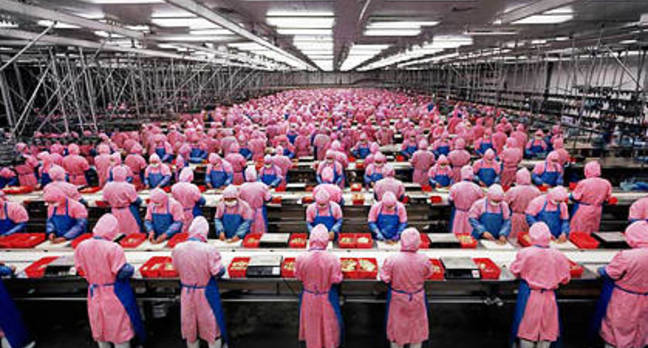
Factory workers in China source


 9. “All the public inscriptions were painted alike, in severe characters of black and white”. 
Chinese Street Signs Source

 10. “The jail might have been the infirmary, the infirmary might have been the jail, the town-hall might have been either, or both, or anything else, for anything appeared to the contrary in the graces of their construction”.
Building in China source


Monday, February 6, 2017

Thoughts & Reflections - Hard Times and Engels Comparison

Thoughts & Reflections - Hard Times and Engels Comparison
Image: Coketown

This T&R is going to compare the thoughts of Charles Dickens and Engels in regards to how they viewed the conditions of living during the industrial revolution. The thing that is interesting is that they do share some of the same ideas however they say them in different ways. Dickens uses a more poetic tone while Engels uses a more philosophical tone. 
The first idea that they share is the concern of air quality. Engels starts by saying "The carbonic acid gas, engendered by respiration and fire, remains in the streets by reason of its specific gravity...The lungs of the inhabitants fail to receive the due supply of oxygen. Dickens shows this with the quote "a town of red brick, or of brick that would have been red if the smoke and ashes allowed it." Both of these quotes show the authors commenting on the poor air quality and heavy smog. 
The second idea they share is the idea that factory work is dehumanizing. Dickens states "The piston of the steam engine worked monotonously up and down, like the head of an elephant in melancholy madness.” While Engels states "This condition which degrades, in the most shameful way, both sexes." Both of these statements have to due with the fact that working in the factory conditions are detrimental to the health and well being of the people.
This concept can be seen in a different way with the Dickens stating “It contained several large streets, all very like one another: and many small streets still more like one another, inhabited by people equally like one another, who all went in and out at the same hours with the same sound upon the same pavement, to do the same work, and to whom every day was the same as yesterday and tomorrow and every year the counterpart of the last and the next”. Engels says that "They are deprived of all enjoyments except that of sexual indulgence and drunkenness, are worked every day to the point of complete exhaustion of their mental and physical energies." These quotes both show the monotonous and never ending work for the men and women of the industrial era.
 [Side Note: Nine Inch Nails - a music group that is considered "Industrial" meaning there music invokes the feeling of the industrial world, with pumping engine like drum beats, and mechanical droning overtones. One of their songs titled "Every Day Is Exactly The Same" echos the thoughts of Dickens "whom every day was the same as yesterday and tomorrow and every year the counterpart of the last and the next" As well as the dehumanization that Engels states.]  


I believe I can see the future
'Cause I repeat the same routine
I think I used to have a purpose
But then again, that might have been a dream
I think I used to have a voice
Now I never make a sound
I just do what I've been told
I really don't want them to come around, oh no
Every day is exactly the same
There is no love here and there is no pain
Every day is exactly the same
I can feel their eyes are watching
In case I lose myself again
Sometimes I think I'm happy here
(Sometimes)
Sometimes, yet I still pretend
I can't remember how this got started
Oh, but I can tell you exactly how it will end
Every day is exactly the same
There is no love here and there is no pain
Every day is exactly the same
I'll write it on a little piece of paper
I'm hoping, someday, you might find
Well I'll hide it behind something
They won't look behind
I am still inside her
A little bit comes bleeding through
I wish this could've been any other way
But I just don't know, I don't know what else I can do
Every day is exactly the same
There is no love here and there is no pain
Every day is exactly the same
There is no love here and there is no pain
Every day is exactly the same
(Every day is the same!)


Wednesday, January 25, 2017

History of The World In 6 Glasses Summary Chapter 11

History of The World In 6 Glasses Summary Chapter 11
Image: Coca Cola


In 19 century America the production style allowed for unskilled labor to produce professional quality products on a mass scale


the first sodas were produced by an English scientist. He found out a way to carbonate drinks. These sparkling mineral waters were said to have medicinal properties. He invented a machine to make 12 gallons of soda at a time and he thought of combining it with fruit juice and sugar. This is now referred to as an “Italian soda” in America. Another man named Schweppes created another more mild sparkling water that the British really enjoyed. This boom in soda allowed for the rise of hand made syrups. Sodium bicarbonate was then used to make drinks fizzy, thus giving them the name of soda water. Thomas Jefferson and James Madison as well as George Washington were highly interested in soda. In America soda moved from a scientific endeavor to a commercial one. This was done in part by a man named Benjamin Sillman. In America people were experimenting with making fizzy lemonade as well as making wine spritzers. People were starting to invent huge soda machines. The man who made Coca-Cola also was experienced in inventing quack remedies. The man decided to combine some of the leaf of the coca plant to add a little pep to people who drank Coca-Cola. He sold these to pharmacies. The man who made the iconic double C’s is Frank Robbinson, who suggested the idea to Pembleton. The competition that drove the soda market eventually led to rapid expansion of global markets.


Tuesday, January 24, 2017

Thoughts & Reflections - The Condition of the Working Class in England

Thoughts & Reflections - The Condition of the Working Class in England


Now I will first address my image. Even though Disney musicals may seem to be irrelevant, all of those happy chimney sweepers probably died of cancer and were children. Source: Here Since I am discussing the living and working conditions of industrial era England I thought it would be fitting to show just another view point on living conditions. This article is about the children who were used to clean chimneys. Kids as young as 6 were becoming disfigured as well as developing serious lung issues. Not only that but kids frequently died due to the risky nature of the job.

Engels also happens to share a very similar viewpoint. He starts by explaining how the city was built too dense and that made ventilation nearly impossible. With so many fires burning oxygen within the city was low because too many chemicals, as well as the cities' lack of sanitary control meant that all of the rot was just being added to the air. All of these mix with factory exhaust that creates a toxic air which means people who live in the city are often developing chronic diseases, and respiratory diseases. Another point Engels discusses the effect factories as well as the industrial revolution as a whole on the family. He states that since factories try to minimize time away from work fathers are sent to live in factory dorms that are choked by air pollution. Engels also points out the tragic effect of making mothers work. When women are forced to work and not raise their children, it makes the children disenfranchised and lost. He states the industrial revolution is causing a serious condition, "this condition which degrades, in the most shameful way, both sexes." This is done because people think that profit, and larger corporate agenda is more important.
I think this article is super fascinating for a few things. First, it raises an issue that can be seen through modern history. The beat movement comes to mind. In The Dharma Bums a beat movement book, contains a passage where the main characters lament about the way all of the houses look the same, and all have the same TV on and listening to whatever message was broadcasted. This issue of finding direction in a modern world is also explored by philosophers like Alan Watts. Another example of searching for meaning in a modern world can be found in the works of Charles Bukowski. Bukowski published many autobiographical stories of when he came back from a World War II draft and had to find work in Los Angeles. The issue Engels has found has not been addressed enough. We may think we have solved the issue, but instead, we are sold the solution. We have the mainstream media to thank in regards to setting social norms, and blaring advertisements designed to psychologically affect us. Even this blog you are viewing now is run by Google, who is harvesting your information. Go install an extension or plugin for your browser that tracks every time Google records your ad data. Engels is right when he says we need to stop degrading the human race.


Wednesday, January 18, 2017

The French Revolution - Present Perfect – Ideas from the French Revolution That Have a Place in Today's World

Human Rights in the 21st Century.


News Article:
Current Genocide
ISIS Guilty of Genocide


Declaration of Human Rights


     The human right that I have chose to talk about is number 3. The principle of all sovereignty resides essentially in the nation. No body nor individual may exercise any authority which does not proceed directly from the nation. This was originally created during the French revolution to level the political playing field and helped make sure that any one man could not rise to power using force or money, however the French revolution failed. These human rights are still very relevant today. This was hypocritically shown during the reign of terror when the revolutionaries started executing way too many people. This constant blood bath was just one of the reasons the revolution failed. 

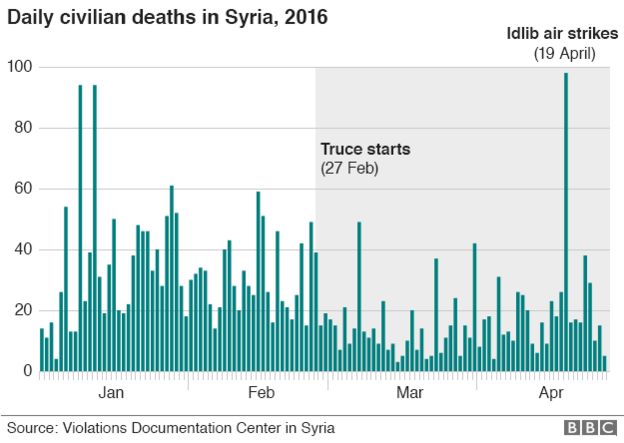
     In Syria the terrorist organization known as ISIS is violating human rights by killing, kidnapping, as well as starving prisoners and forcing children into combat. This violates this human right because ISIS is exerting authority and breaking laws that they do not have any right to break. They are also breaking several others, one being 4. Liberty consists in the freedom to do everything which injures no one else; hence the exercise of the natural rights of each man has no limits except those which assure to the other members of the society the enjoyment of the same rights. These limits can only be determined by law. Another human right that is violated is: 10. No one shall be disquieted on account of his opinions, including his religious views, provided their manifestation does not disturb the public order established by law. It also violates 16. A society in which the observance of the law is not assured, nor the separation of powers defined, has no constitution at all. All of these things are being violated in Syria right now.


     Human rights set an important benchmark in terms of where we should be heading to create a more safe and stable society. However, this is hard for a number of reasons. First we have to fix the rights that are currently being violated. In this case of genocide the most realistic solution for completely  stopping it would be to go to war. These rights are impressive and sound perfect but they are extremely hard to achieve.

Friday, January 13, 2017

Danton Reflection Questions


Image: French Court
In the movie Danton, when the little kid recites the doctrine of the revolution, Robespierre realizes that the blood shed, and terror is now being imprinted into the children. This scene shows us the ultimate failure of the revolution. Danton shows us the underside of a revolution that tries to right the wrongs of the current reign, however their extreme violence eventually led to an unstoppable downward spiral which eventually ended with the members who were responsible dead. This shows the idealized rights of the revolution failing when the revolution violates the rights that it tries to enforce.