
Tuesday, January 10, 2017

Thoughts & Reflections on: Human Rights

Thoughts & Reflections on: The Preamble to Human Rights
Picture: logo of human rights
The Declaration the Rights of humans give a foundation both legally and philosophically to the concept of “basic rights.” This declaration of rights helps define a new era of human history. With the creation of these standards we give ourselves a guide that if implemented correctly, will improve the quality of living all across the world. These rights helped pave the way for large, civic change. These allow us to set a moral compass for how countries, and governments, and everybody should adhire to. This is a summary of the basic human rights:
Men:
1. Men are born and remain free and equal in rights. Social distinctions may be founded only upon the general good. 2. The aim of all political association is the preservation of the natural and imprescriptible rights of man. These rights are liberty, property, security, and resistance to oppression.
3. The principle of all sovereignty resides essentially in the nation. No body nor individual may exercise any authority which does not proceed directly from the nation. 4. Liberty consists in the freedom to do everything which injures no one else; hence the exercise of the natural rights of each man has no limits except those which assure to the other members of the society the enjoyment of the same rights. These limits can only be determined by law. 5. Law can only prohibit such actions as are hurtful to society. Nothing may be prevented which is not forbidden by law, and no one may be forced to do anything not provided for by law. 6. Law is the expression of the general will. Every citizen has a right to participate personally, or through his representative, in its foundation. It must be the same for all, whether it protects or punishes. All citizens, being equal in the eyes of the law, are equally eligible to all dignities and to all public positions and occupations, according to their abilities, and without distinction except that of their virtues and talents. 7. No person shall be accused, arrested, or imprisoned except in the cases and according to the forms prescribed by law. Any one soliciting, transmitting, executing, or causing to be executed, any arbitrary order, shall be punished. But any citizen summoned or arrested in virtue of the law shall submit without delay, as resistance constitutes an offense. 8. The law shall provide for such punishments only as are strictly and obviously necessary, and no one shall suffer punishment except it be legally inflicted in virtue of a law passed and promulgated before the commission of the offense. 9. As all persons are held innocent until they shall have been declared guilty, if arrest shall be deemed indispensable, all harshness not essential to the securing of the prisoner's person shall be severely repressed by law. 10. No one shall be disquieted on account of his opinions, including his religious views, provided their manifestation does not disturb the public order established by law. 11. The free communication of ideas and opinions is one of the most precious of the rights of man. Every citizen may, accordingly, speak, write, and print with freedom, but shall be responsible for such abuses of this freedom as shall be defined by law. 12. The security of the rights of man and of the citizen requires public military forces. These forces are, therefore, established for the good of all and not for the personal advantage of those to whom they shall be intrusted. 13. A common contribution is essential for the maintenance of the public forces and for the cost of administration. This should be equitably distributed among all the citizens in proportion to their means.
14. All the citizens have a right to decide, either personally or by their representatives, as to the necessity of the public contribution; to grant this freely; to know to what uses it is put; and to fix the proportion, the mode of assessment and of collection and the duration of the taxes. 15. Society has the right to require of every public agent an account of his administration. 16. A society in which the observance of the law is not assured, nor the separation of powers defined, has no constitution at all. 17. Since property is an inviolable and sacred right, no one shall be deprived thereof except where public necessity, legally determined, shall clearly demand it, and then only on condition that the owner shall have been previously and equitably indemnified.
Woman:
1. Woman is born free and lives equal to man in her rights. Social distinctions can be based only on the common utility.
2. The purpose of any political association is the conservation of the natural and imprescriptible rights of woman and man; these rights are liberty property, security, and especially resistance to oppression.
3. The principle of all sovereignty rests essentially with the nation, which is nothing but the union of woman and man; no body and no individual can exercise any authority which does not come expressly from it (the nation).
4. Liberty and justice consist of restoring all that belongs to others; thus, the only limits on the exercise of the natural rights of woman are perpetual male tyranny; these limits are to be reformed by the laws of nature and reason.
5. Laws of nature and reason proscribe all acts harmful to society; everything which is not prohibited by these wise and divine laws cannot be prevented, and no one can be constrained to do what they do not command.
6. The law must be the expression of the general will; all female and male citizens must contribute either personally or through their representatives to its formation; it must be the same for all: male and female citizens, being equal in the eyes of the law, must be equally admitted to all honors, positions, and public employment according to their capacity and without other distinctions besides those of their virtues and talents.
7. No woman is an exception; she is accused, arrested, and detained in cases determined by law. Women, like men, obey this rigorous law.
8. The law must establish only those penalties that are strictly and obviously necessary...
9. Once any woman is declared guilty, complete rigor is exercised by law.
10. No one is to be disquieted for his very basic opinions; woman has the right to mount the scaffold; she must equally have the right to mount the
rostrum, provided that her demonstrations do not disturb the legally established public order.
11. The free communication of thoughts and opinions is one of the most precious rights of woman, since that liberty assures recognition of children by their fathers. Any female citizen thus may say freely, I am the mother of a child who belongs to you, without being forced by a barbarous prejudice to hide the truth; (an exception may be made) to respond to the abuse of this liberty in cases determined by law.
12. The guarantee of the rights of woman and the female citizen implies a major benefit; this guarantee must be instituted for the advantage of all, and not for the particular benefit of those to whom it is entrusted.
13. For the support of the public force and the expenses of administration, the contributions of woman and man are equal; she shares all the duties and all the painful tasks; therefore, when must have the same share in the distribution of positions, employment, offices, honors, and jobs.
14. Female and male citizens have the right to verify, either by themselves of through their representatives, the necessity of the public contribution. This can only apply to women if they are granted an equal share, not only of wealth, but also of public administration, and in the determination of the proportion, the base, the collection, and the duration of the tax.
15. The collectivity of women, joined for tax purposes to the aggregate of men, has the right to demand an accounting of his administration from any public agent.
16. No society has a constitution without the guarantee of rights and the separation of powers; the constitution is null if the majority of individuals comprising the nation have not cooperated in drafting it.
17. Property belongs to both sexes whether united or separate; for each it is an inviolable and sacred right' no one can be deprived of it, since it is the true patrimony of nature, unless the legally determined public need obviously dictates it, and then only with a just and prior indemnity.
Picture: logo of human rights
The Declaration the Rights of humans give a foundation both legally and philosophically to the concept of “basic rights.” This declaration of rights helps define a new era of human history. With the creation of these standards we give ourselves a guide that if implemented correctly, will improve the quality of living all across the world. These rights helped pave the way for large, civic change. These allow us to set a moral compass for how countries, and governments, and everybody should adhire to. This is a summary of the basic human rights:
Men:
1. Men are born and remain free and equal in rights. Social distinctions may be founded only upon the general good. 2. The aim of all political association is the preservation of the natural and imprescriptible rights of man. These rights are liberty, property, security, and resistance to oppression.
3. The principle of all sovereignty resides essentially in the nation. No body nor individual may exercise any authority which does not proceed directly from the nation. 4. Liberty consists in the freedom to do everything which injures no one else; hence the exercise of the natural rights of each man has no limits except those which assure to the other members of the society the enjoyment of the same rights. These limits can only be determined by law. 5. Law can only prohibit such actions as are hurtful to society. Nothing may be prevented which is not forbidden by law, and no one may be forced to do anything not provided for by law. 6. Law is the expression of the general will. Every citizen has a right to participate personally, or through his representative, in its foundation. It must be the same for all, whether it protects or punishes. All citizens, being equal in the eyes of the law, are equally eligible to all dignities and to all public positions and occupations, according to their abilities, and without distinction except that of their virtues and talents. 7. No person shall be accused, arrested, or imprisoned except in the cases and according to the forms prescribed by law. Any one soliciting, transmitting, executing, or causing to be executed, any arbitrary order, shall be punished. But any citizen summoned or arrested in virtue of the law shall submit without delay, as resistance constitutes an offense. 8. The law shall provide for such punishments only as are strictly and obviously necessary, and no one shall suffer punishment except it be legally inflicted in virtue of a law passed and promulgated before the commission of the offense. 9. As all persons are held innocent until they shall have been declared guilty, if arrest shall be deemed indispensable, all harshness not essential to the securing of the prisoner's person shall be severely repressed by law. 10. No one shall be disquieted on account of his opinions, including his religious views, provided their manifestation does not disturb the public order established by law. 11. The free communication of ideas and opinions is one of the most precious of the rights of man. Every citizen may, accordingly, speak, write, and print with freedom, but shall be responsible for such abuses of this freedom as shall be defined by law. 12. The security of the rights of man and of the citizen requires public military forces. These forces are, therefore, established for the good of all and not for the personal advantage of those to whom they shall be intrusted. 13. A common contribution is essential for the maintenance of the public forces and for the cost of administration. This should be equitably distributed among all the citizens in proportion to their means.
14. All the citizens have a right to decide, either personally or by their representatives, as to the necessity of the public contribution; to grant this freely; to know to what uses it is put; and to fix the proportion, the mode of assessment and of collection and the duration of the taxes. 15. Society has the right to require of every public agent an account of his administration. 16. A society in which the observance of the law is not assured, nor the separation of powers defined, has no constitution at all. 17. Since property is an inviolable and sacred right, no one shall be deprived thereof except where public necessity, legally determined, shall clearly demand it, and then only on condition that the owner shall have been previously and equitably indemnified.
Woman:
1. Woman is born free and lives equal to man in her rights. Social distinctions can be based only on the common utility.
2. The purpose of any political association is the conservation of the natural and imprescriptible rights of woman and man; these rights are liberty property, security, and especially resistance to oppression.
3. The principle of all sovereignty rests essentially with the nation, which is nothing but the union of woman and man; no body and no individual can exercise any authority which does not come expressly from it (the nation).
4. Liberty and justice consist of restoring all that belongs to others; thus, the only limits on the exercise of the natural rights of woman are perpetual male tyranny; these limits are to be reformed by the laws of nature and reason.
5. Laws of nature and reason proscribe all acts harmful to society; everything which is not prohibited by these wise and divine laws cannot be prevented, and no one can be constrained to do what they do not command.
6. The law must be the expression of the general will; all female and male citizens must contribute either personally or through their representatives to its formation; it must be the same for all: male and female citizens, being equal in the eyes of the law, must be equally admitted to all honors, positions, and public employment according to their capacity and without other distinctions besides those of their virtues and talents.
7. No woman is an exception; she is accused, arrested, and detained in cases determined by law. Women, like men, obey this rigorous law.
8. The law must establish only those penalties that are strictly and obviously necessary...
9. Once any woman is declared guilty, complete rigor is exercised by law.
10. No one is to be disquieted for his very basic opinions; woman has the right to mount the scaffold; she must equally have the right to mount the
rostrum, provided that her demonstrations do not disturb the legally established public order.
11. The free communication of thoughts and opinions is one of the most precious rights of woman, since that liberty assures recognition of children by their fathers. Any female citizen thus may say freely, I am the mother of a child who belongs to you, without being forced by a barbarous prejudice to hide the truth; (an exception may be made) to respond to the abuse of this liberty in cases determined by law.
12. The guarantee of the rights of woman and the female citizen implies a major benefit; this guarantee must be instituted for the advantage of all, and not for the particular benefit of those to whom it is entrusted.
13. For the support of the public force and the expenses of administration, the contributions of woman and man are equal; she shares all the duties and all the painful tasks; therefore, when must have the same share in the distribution of positions, employment, offices, honors, and jobs.
14. Female and male citizens have the right to verify, either by themselves of through their representatives, the necessity of the public contribution. This can only apply to women if they are granted an equal share, not only of wealth, but also of public administration, and in the determination of the proportion, the base, the collection, and the duration of the tax.
15. The collectivity of women, joined for tax purposes to the aggregate of men, has the right to demand an accounting of his administration from any public agent.
16. No society has a constitution without the guarantee of rights and the separation of powers; the constitution is null if the majority of individuals comprising the nation have not cooperated in drafting it.
17. Property belongs to both sexes whether united or separate; for each it is an inviolable and sacred right' no one can be deprived of it, since it is the true patrimony of nature, unless the legally determined public need obviously dictates it, and then only with a just and prior indemnity.
Saturday, December 17, 2016
Tea the Drink That Changed the World Summary - Chapter 3 - Tea in Ancient Japan

Tea the Drink That Changed the World: Ancient Japanese Tea
Tea served a major role in Japanese history. Tea was first introduced in Japan during the Nara and Heian periods when they sent an envoy of leading Buddhist scholars to what was then Tang dynasty China. The Buddhist scholars brought back tea seeds from China, and thusly Tea was introduced to Japan. However this did not mean everyone in Japan started drinking tea immediately, as tea during that time period was extremely valuable and only supposed to be consumed by royalty, nobility and Buddhist scholars. During the early Heian period Emperor Saga highly discouraged the drinking and cultivation of to, to try to keep its value. In the early Kamakura period new tea seeds were brought into Japan by Eisai, another Buddhist scholar and founder of the Rinzai sect of zen Buddhism. These seeds were brought from Kyoto during Sung dynasty China. The first book of tea written in japan was by Kissa Yojoki and it was titled "How to Stay Healthy by Drinking Tea." During this time period the emergence of the printing press allowed this book to be published in several different languages. This then marked the period when Tea started becoming a drink that was consumed by many people, and the rise in the popularity of tea,
Friday, December 16, 2016
High Spirits High Seas Video Presentation

Our video presentation on High Spirits High Seas - History of the World in 6 glasses.
Thursday, December 15, 2016
The Political Philosophy of: Ben Dover
 |
| Mr. Ben Dover |
Renaissance Philosophy My Way.
The Biography of Mr. Ben Dover:
Ben Dover was born in the late 1980s but nobody is sure the exact date because the historical records of the time period were very unreliable. Ben Dover is an educated man. He attended school, an achieved a bachelors degree in philosophy. He then tried to find a job in his field but since he majored in philosophy he only found a job in Olive Garden. Ben Dover spent most of his time in this garden where he was able to interact with many people. This exposure to so many walks of life allowed him to generate his own philosophical ideas by blending several philosophies from the Renaissance. Amazingly the philosophy he created is still applicable to the modern American political scene.
Excerpt from: "Ben Dover's Conversation in The Garden."
Today is a slow day. So I sit down and have a chat with some of my friends at a table at the back of the garden. I think the political situation in America is toxic, and not healthy for the citizens living in the borders. We have demagogues that can say abhorrent things, and their polls in the race don't drop. They rise. Some philosophers would be okay with this. Machiavelli states that people are used to being ruled, and that the well being of the people should be ignored. The state exists for the ruler. President-elect Trump has now appointed Exxon Mobil's CEO as head of state. Trump is now leading America in the way of an international business with little regard for the people of the United States. The United States would be a lot better if the political ideals of Thomas More. There would be no greed, and little precedent to start wars. Even president Obama is not good at not starting wars. His drone program has targeted not only innocent people, but it is also very antagonistic towards other sovereign nations. Trump is almost always propelled by greed and even during his short time in office he has almost completely ruined our diplomatic relations with China, by accepting a call and acknowledging the fact that Taiwan is a country.
Philosophical Legend:
Machiavelli
Baldassare Castiglione
Sir Thomas More
Thoughts & Reflections on: The Human Story - Enlightenment

Fun fact! Maximilian is known for being extremely aggressive. He eventually started the time period during the French revolution known has the "reign of terror." when the French people were executing traitors as well as religious figures, and pretty much anybody Max opposed. Ironically Max eventually was killed because of this and thus ended the reign of terror.
Thoughts & Reflections on: The Enlightenment a Brief Summary
What is the enlightenment? The enlightenment is a time period that marks major social change throughout the world. These social changes have a lot in common. The enlightenment's social changes include the fall of monarchies, the ideal that all men are created equal, and the rise of democracy. This can be seen during the American revolution when the constitution was created and signed, eliminating the monarchy of Britain and starting the republic of America. The same constitution was used during the bloody French revolution. This revolution was sparked because the people were not being represented during voting correctly. Only the lords and noble men could vote. This started the push for democracy and reform. The end of the French revolution marked the fall of the French monarchy and the rise of a traditional voting system. During this time the land of the catholic church was also seized and many members of the church were executed. This marked the fall of the rule of religion and kings.
Thursday, December 8, 2016
History of The World in 6 Glasses - High Seas High Spirits Summary
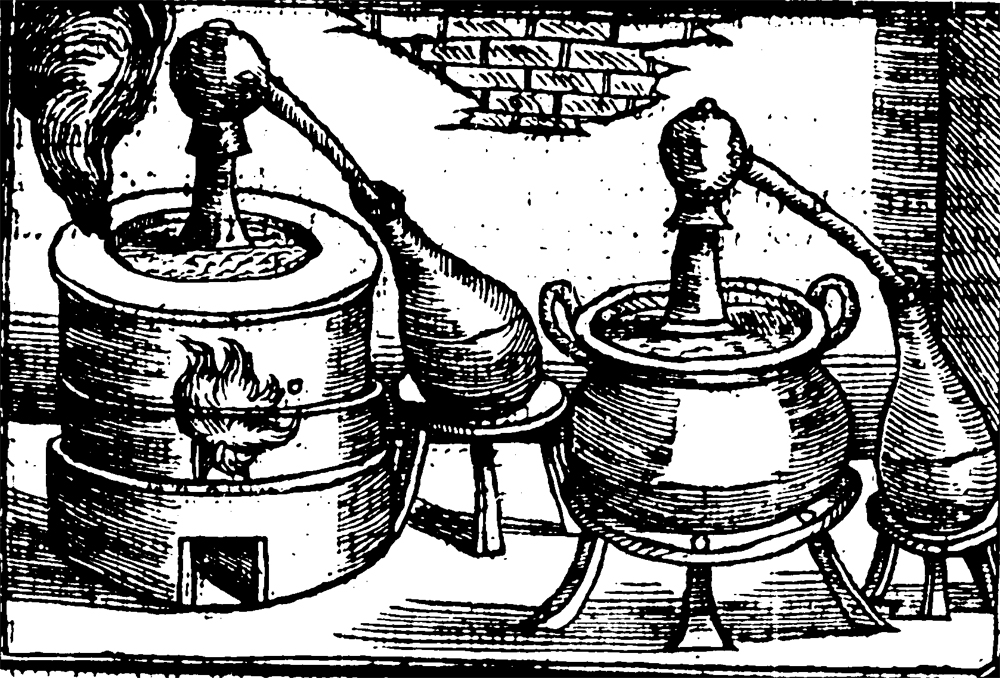
Summary of: High Spirits High Seas
This chapter explores how the first distilling apparatus were made and how the discovery of spirits and hard alcohol drove discovery, sugar production, and the slave trade. The chapter starts off by describing the cultural power house of the time, Cordoba. Cordoba was advanced because they had street lights, a complex sewer system, and the largest library of knowledge at the time. This allowed them to invent and innovate using knowledge that may have been lost or forgotten. One of these inventions was the distillery. The Arabians built this apparatus by looking at books in their library dating back to ancient Mesopotamia and ancient Greece. They based this device off of something that was originally used to create perfume. The first hard alcohol created was fire water, or aqua vitae (life water). The process of making this alcohol was first recorded in code, because it was so powerful. Alcohol was used as a panacea for a long time. Eventually however the process of distilling eventually reached Europe where the drink turned into less of a medicine and more of a recreational drug. Each region had its own distilled drink that was made using region specific ingredients. Brandy, made in England was one of the most valuable trade commodities at the time. The Persians needed more slaves to run their sugar plantations because they were the world's number one exporter of sugar at the time so the Spanish in an attempt to compete with this went to Barbados to try to grow sugar. When the British trade for slaves the African traders would hold alcoholic drinks of high value. The British figured out if they distilled their alcohol they could hold more on the ship, rather than other countries method of using beer instead. In Barbados they figured out they could use the sugar reclaim to make rum. Rum was used to subdue slaves as well as a form of social control. The British again figured out if they mixed rum with water and lemon and lime juice they could make "grog" which held off scurvy allowing the British to hold their naval superiority.
Subscribe to:
Posts (Atom)